Making ClassPass
Work for Gen Z
Certain client data, research, and product details have been generalized or omitted.
Product strategy
Combined student pricing, campus growth, and social booking
Strategic tradeoff
Balanced accessible pricing with long-term customer value
Research outcome
60% increase in stated subscription intent
The problem
ClassPass offered flexibility, but it did not always fit naturally into how students budgeted, planned, and experienced fitness.
Existing membership options did not fully reflect the financial constraints and willingness to pay of university students.
Finding and booking classes required effort outside the tools students already used to organize their schedules.
Fitness is often social, but the booking experience provided limited support for discovering and attending classes with friends.
Strategy
Making fitness more accessible, easier to plan, and more social
Make it accessible
A university-focused membership aligned with student needs
Fit into everyday life
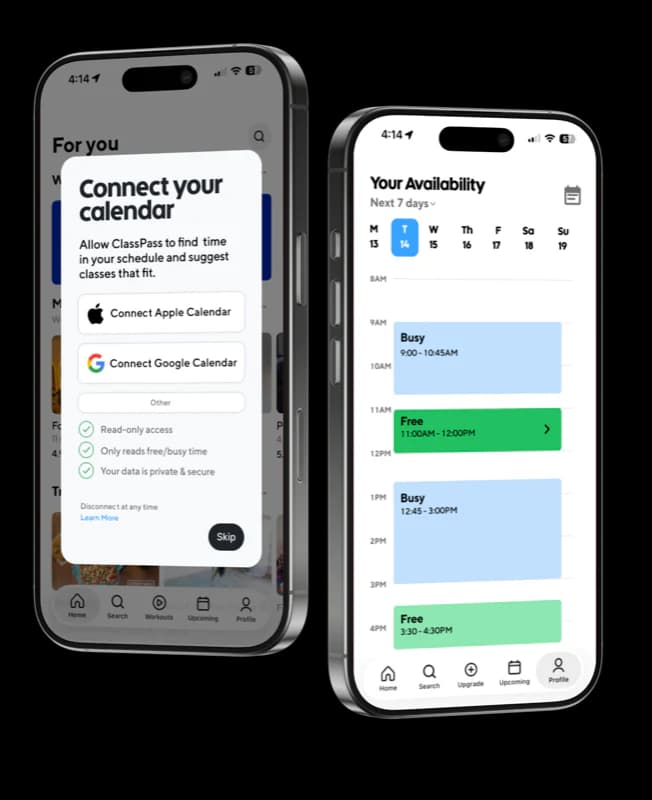
Calendar integration that supports planning and consistency
Make it social
Shared discovery and booking experiences with friends
Interventions
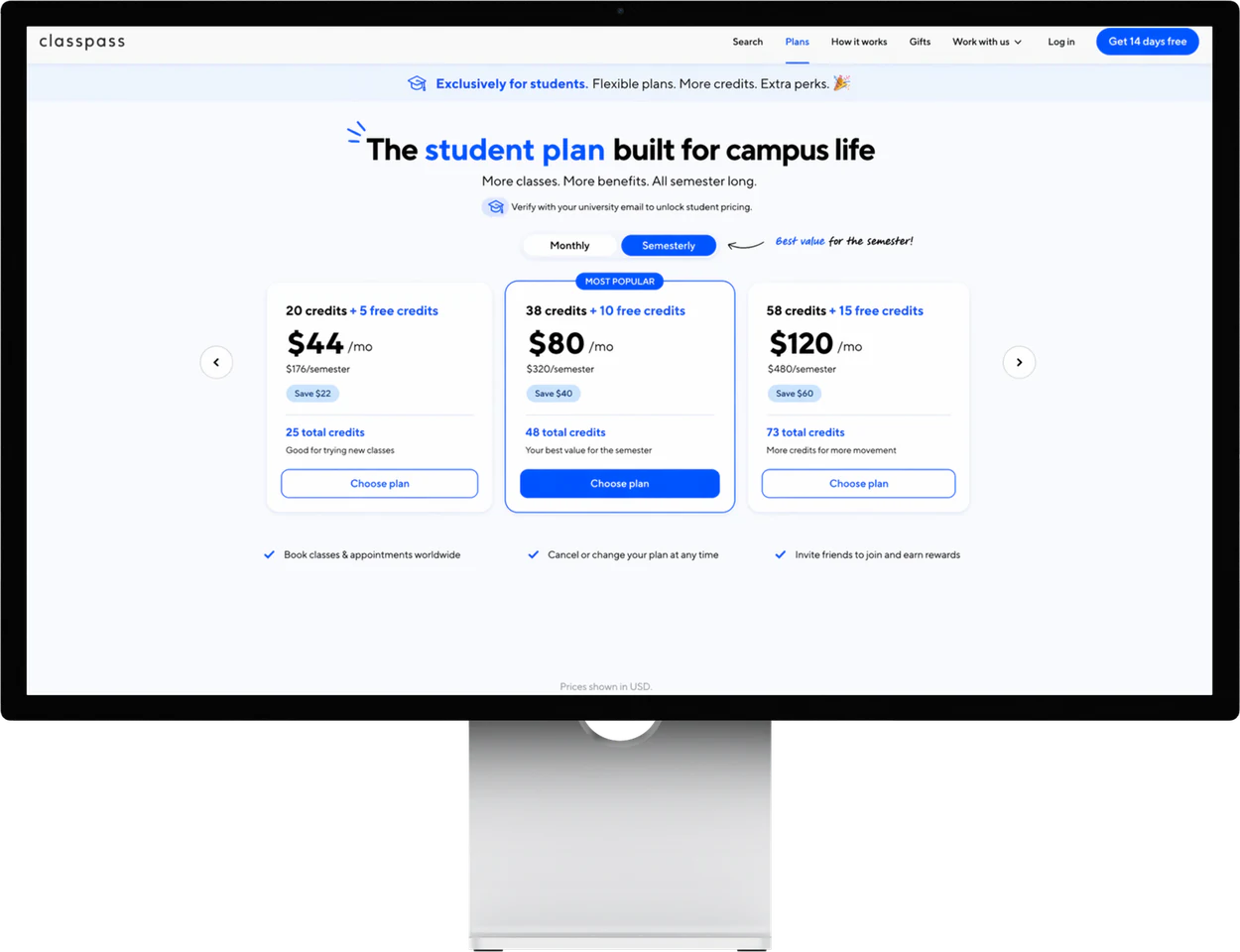
A membership designed around student needs
Developed a university-focused membership concept using willingness-to-pay research to explore pricing and incentives that could make ClassPass more relevant and accessible to students.
- Modeled pricing to preserve financial viability
- Used a semester structure to support stronger retention
- Created a path toward full-price membership after graduation
Accept lower initial revenue to build a longer relationship
Lower student pricing could reduce near-term revenue and encourage cannibalization. However, after evaluating the LTV and demographic data, I found that we could create greater lifetime value through reaching new student users, semester retention, and eventual transitions to full-price membership after graduation.
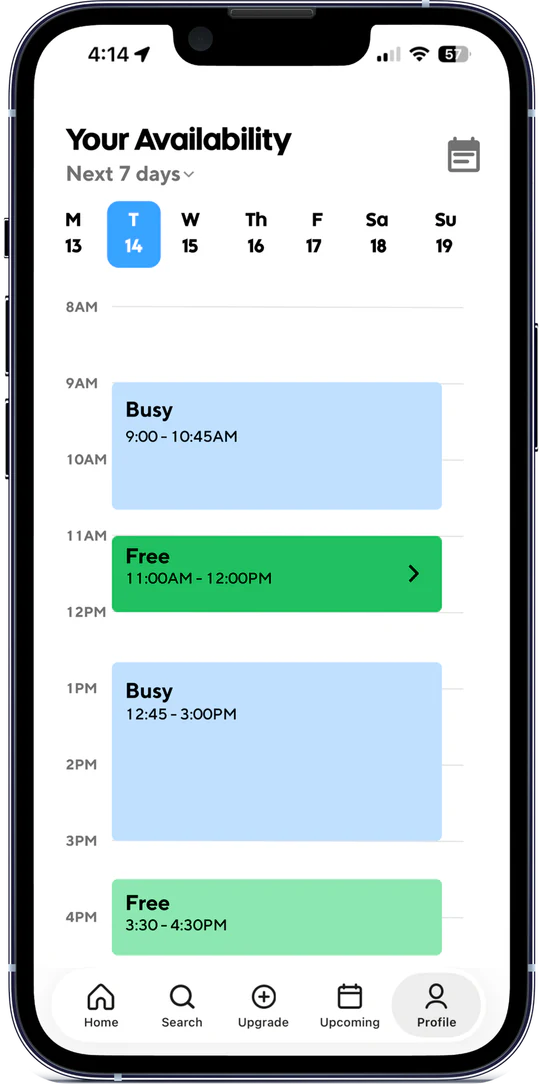
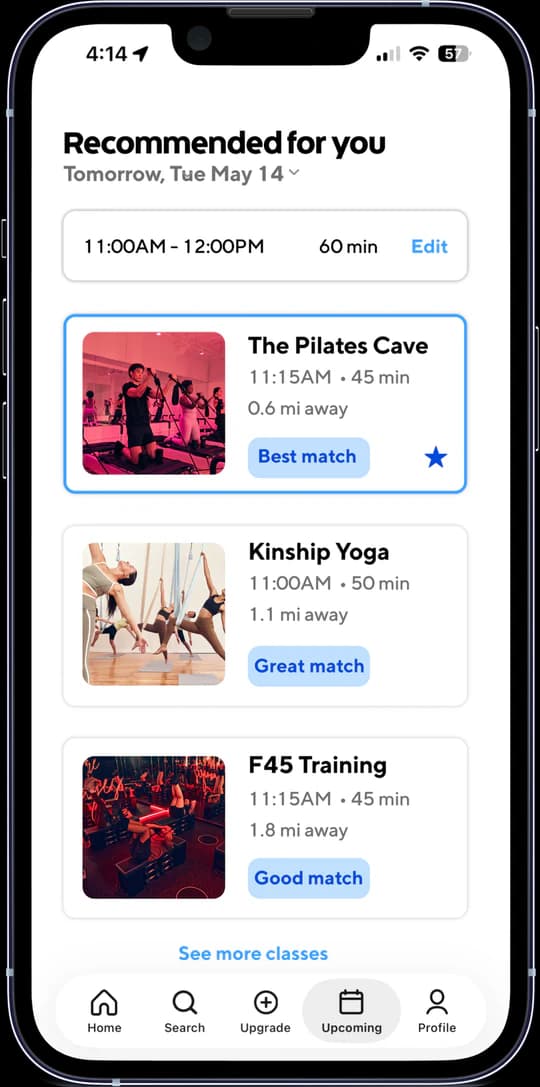
Fitness planning that works with the student calendar
Proposed calendar integration to help users evaluate classes alongside their existing commitments and make fitness easier to incorporate into everyday routines.
- View availability alongside existing commitments
- Add booked classes directly to a calendar
- Reduce scheduling conflicts and planning effort
A more social way to book fitness
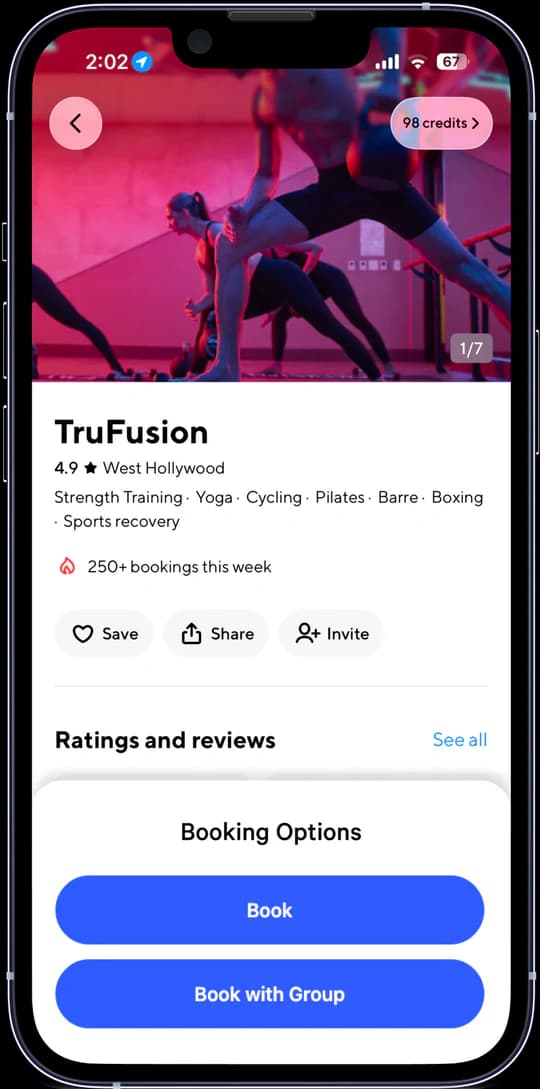
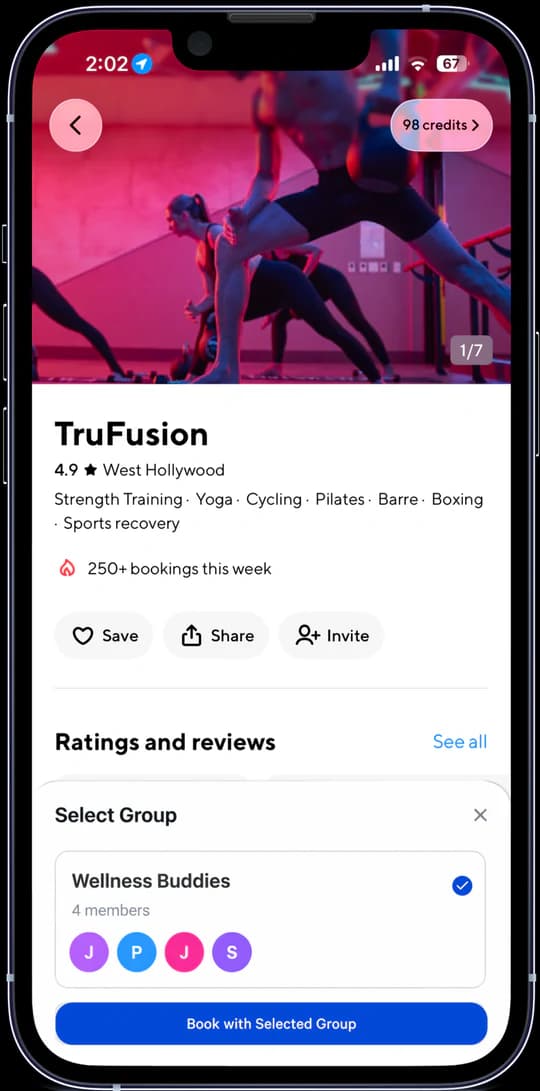
Proposed a shared booking experience that would help users discover classes with friends, coordinate plans, and turn fitness into a more social activity.
- Invite friends to a class
- Compare availability before booking
- Increase adoption through social influence
Give groups time to plan without holding inventory indefinitely
Group booking could strengthen social motivation, but waiting for every participant could leave limited inventory unavailable. I considered short reservation holds or individual confirmation windows that gave friends time to coordinate without allowing incomplete bookings to hold spots indefinitely.
Outcome
Students reported 60% higher subscription intent for the proposed university model.
- Executive recommendation
Presented to ClassPass leadership
Delivered prioritized product, pricing, and go-to-market recommendations to the Senior Director of Growth Marketing.
How I’d measure success
| Intervention | Primary KPI | Guardrail |
|---|---|---|
| University membership | Student-plan conversion rate | Contribution margin per student member |
| Calendar integration | Booking conversion among connected users | Calendar disconnect and permission-revocation rate |
| Social booking | Group-booking completion rate | Group cancellation and no-show rate |
What I learned
Fit matters beyond price
Affordability could not drive adoption alone. ClassPass also needed to fit naturally into students’ routines and lifestyles.
Planning friction can prevent consistency
Even motivated users struggled to utilize credits when booking required working around changing academic and personal schedules.
Social motivation drives participation
Friends created accountability and made students more likely to discover, book, and attend fitness experiences.
Research informed by 75+ interviews and 500+ survey responses